


QL Preset Torque Wrench
QL Preset Torque Wrench for Reliable Manual Fastening
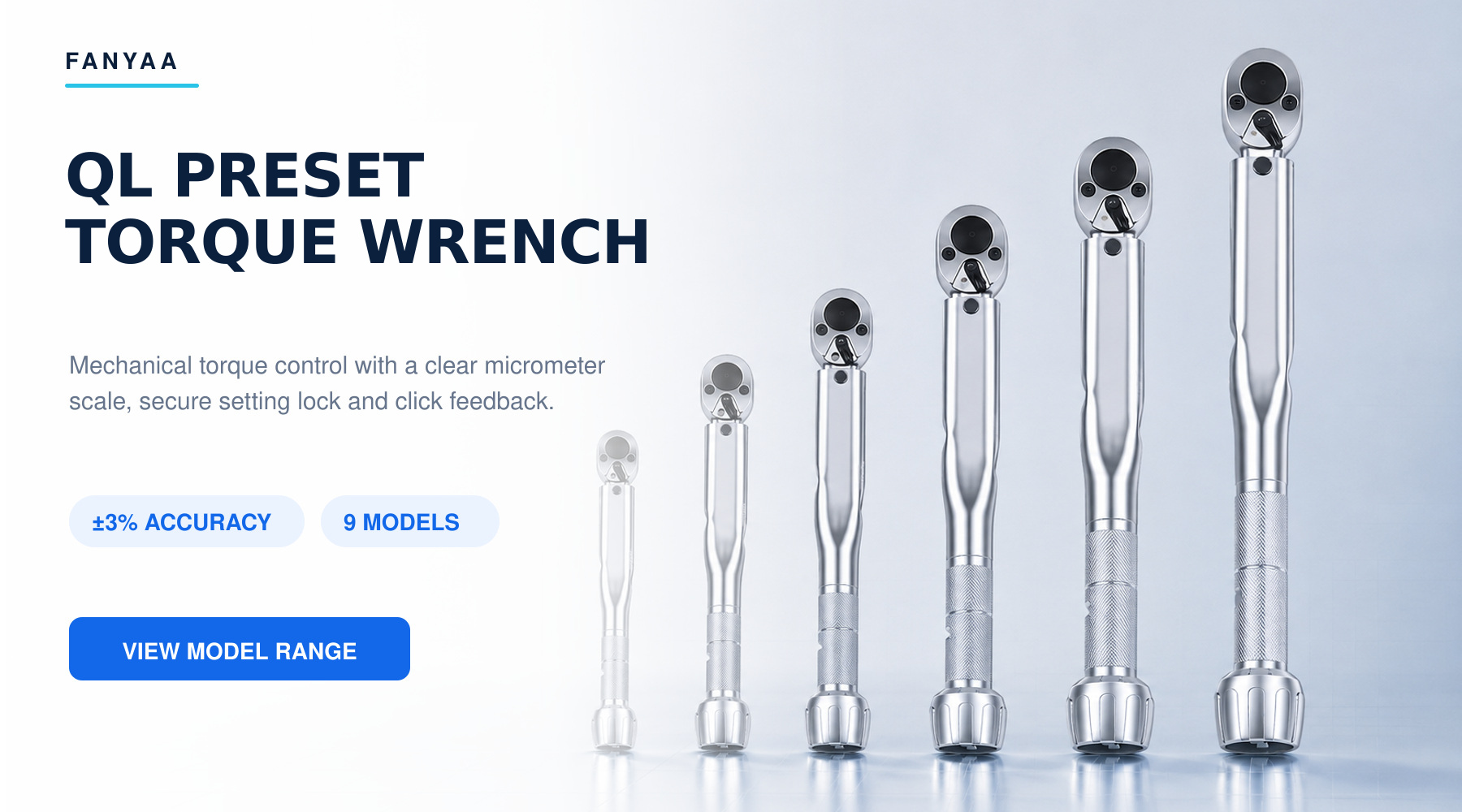
The FANYAA QL Series is a mechanical preset torque wrench designed for controlled tightening in assembly, maintenance and repair applications. Its adjustable torque mechanism allows technicians to set the required torque before fastening, helping improve consistency across repeated bolting operations.
With multiple torque ranges and drive sizes available, the QL Series provides a practical solution for automotive workshops, machinery maintenance, equipment assembly and general industrial fastening.
Consistent Torque Control for Critical Fastening
Correct tightening torque plays an important role in maintaining reliable bolted joints. The QL click-type preset torque wrench helps operators apply a controlled tightening force instead of relying on hand feel alone.
For repetitive maintenance and assembly work, this mechanical torque tool can help reduce variation between operators and support more consistent fastening results across bolts, components and production tasks.
Simple Torque Setting for Repeatable Workshop Use
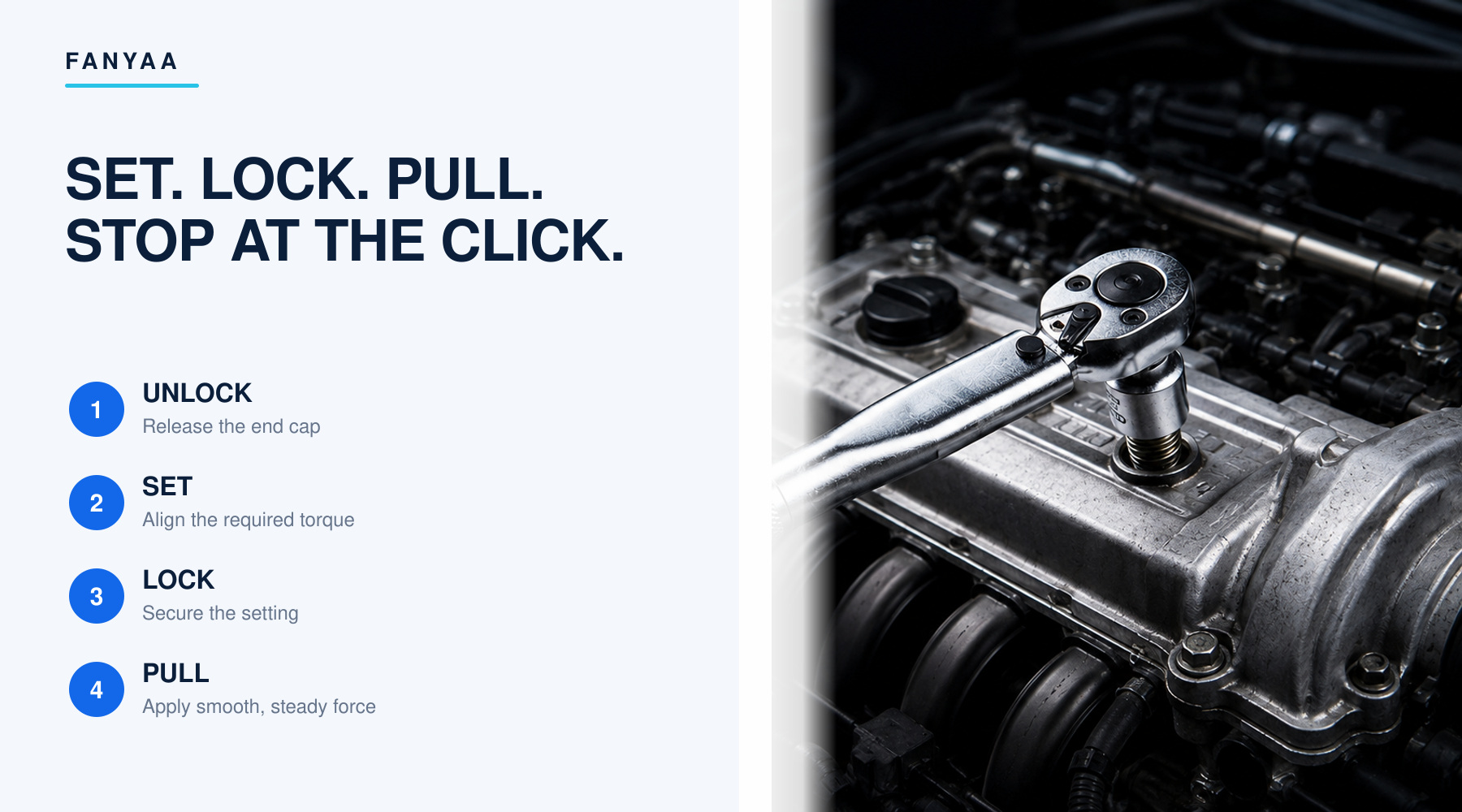
The QL preset torque wrench is designed around a straightforward mechanical adjustment process, making it suitable for technicians who need to change torque values during daily service or assembly work.
Once the target setting is selected and secured, the wrench provides tactile click feedback as the preset torque is reached. This familiar operating principle makes it easy to integrate into existing maintenance procedures without electronic configuration or complicated setup.
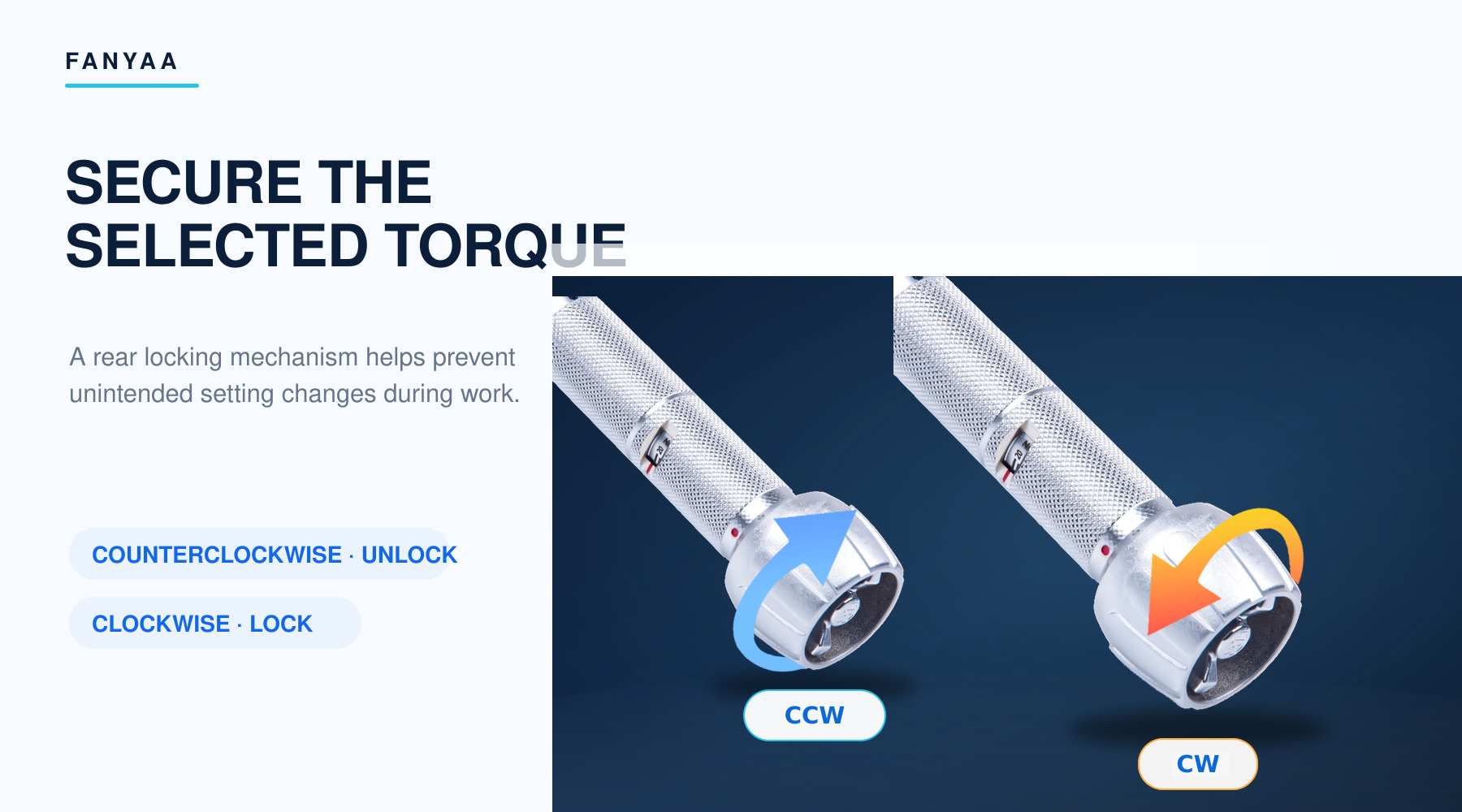
Secure Torque Adjustment for Repetitive Fastening
A stable torque setting is especially important when the same tightening specification is used across multiple fasteners. The QL torque wrench features a mechanical locking design that helps maintain the selected value while the tool is being handled or operated.
This makes the wrench well suited to repetitive workshop and assembly tasks where operators need a reliable adjustable torque wrench without repeatedly checking the setting between fastening operations.
Fine Mechanical Adjustment for Precise Torque Selection
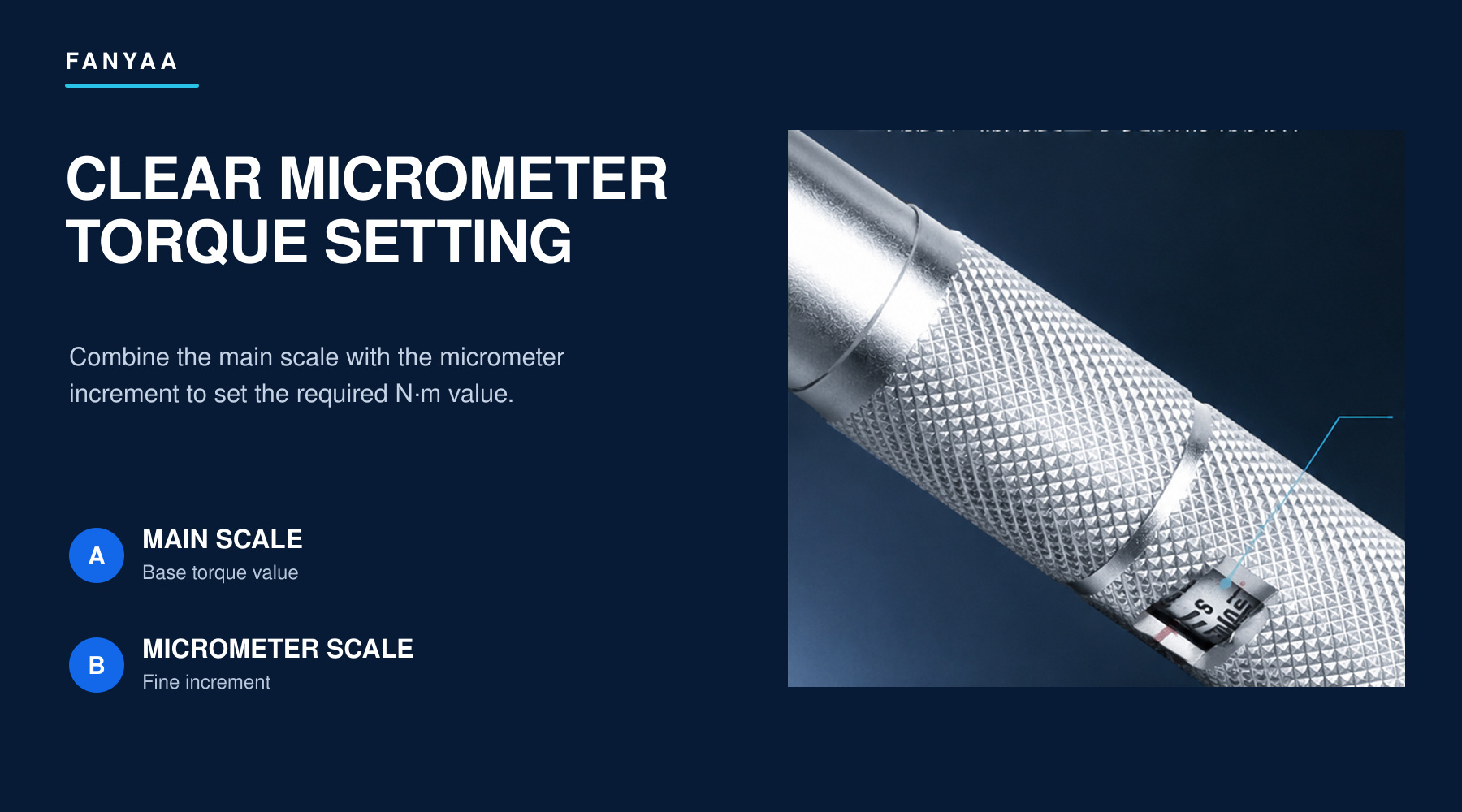
For applications that require more than a rough torque setting, the QL Series uses a graduated mechanical adjustment system that allows operators to select torque values with finer control.
The scale-based design requires no battery or digital interface, making this micrometer torque wrench a practical option for workshops, maintenance teams and production environments that prefer simple, durable mechanical torque tools.
Clear mechanical adjustment also helps technicians verify the selected value before tightening begins.
Reversible Ratchet Design for Efficient Socket Fastening
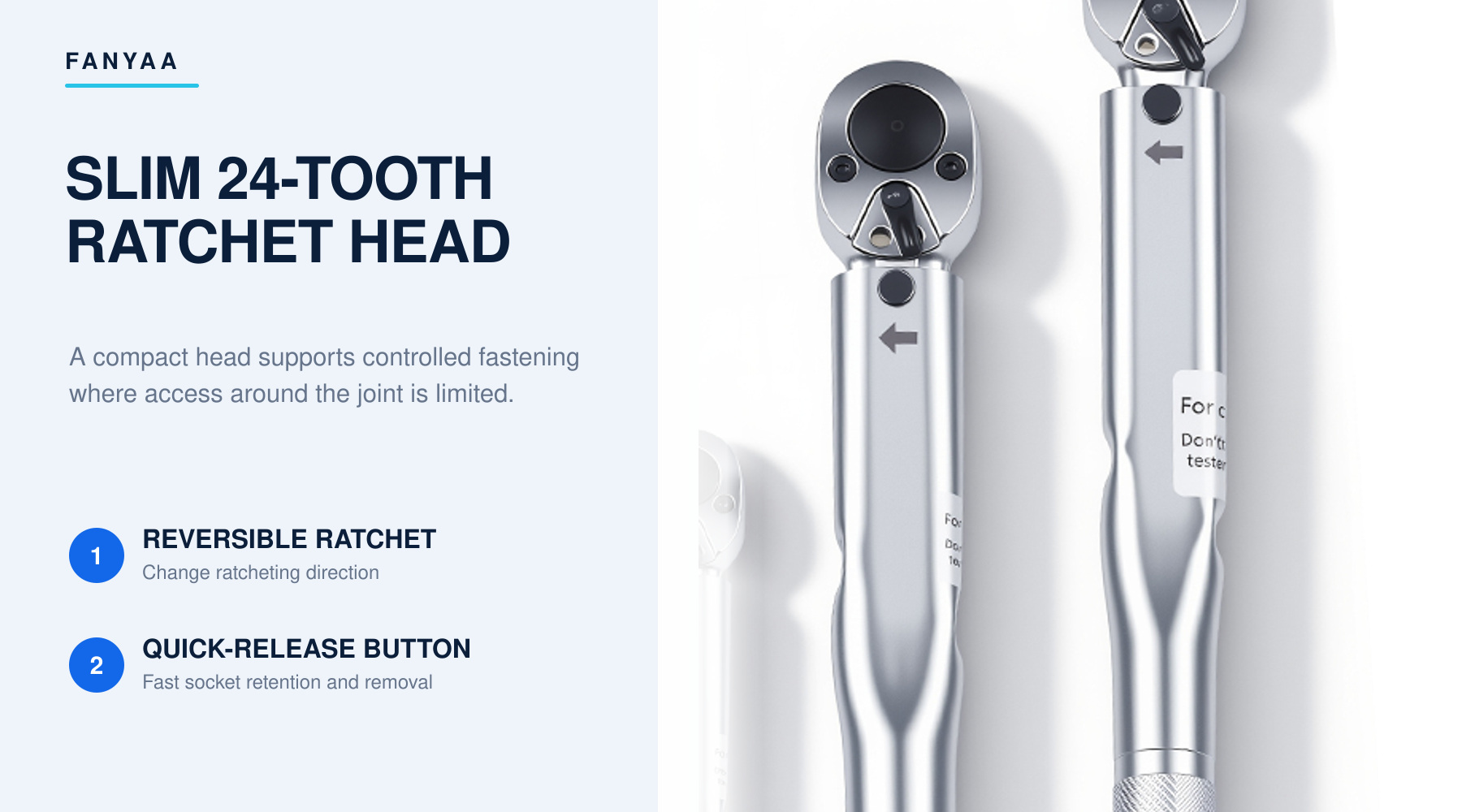
The integrated ratchet mechanism allows technicians to work more efficiently when tightening bolts and nuts with sockets, particularly where repeated repositioning of the wrench would otherwise slow down the job.
A reversible operating direction supports practical workshop use, while the socket retention system simplifies accessory changes between fastening tasks. Combined with the compact head profile, the QL Series can be used across automotive servicing, machinery repair and equipment assembly.
Reversible Ratchet Design for Efficient Socket Fastening
The integrated ratchet mechanism allows technicians to work more efficiently when tightening bolts and nuts with sockets, particularly where repeated repositioning of the wrench would otherwise slow down the job.
A reversible operating direction supports practical workshop use, while the socket retention system simplifies accessory changes between fastening tasks. Combined with the compact head profile, the QL Series can be used across automotive servicing, machinery repair and equipment assembly.
Built for Frequent Industrial and Workshop Handling
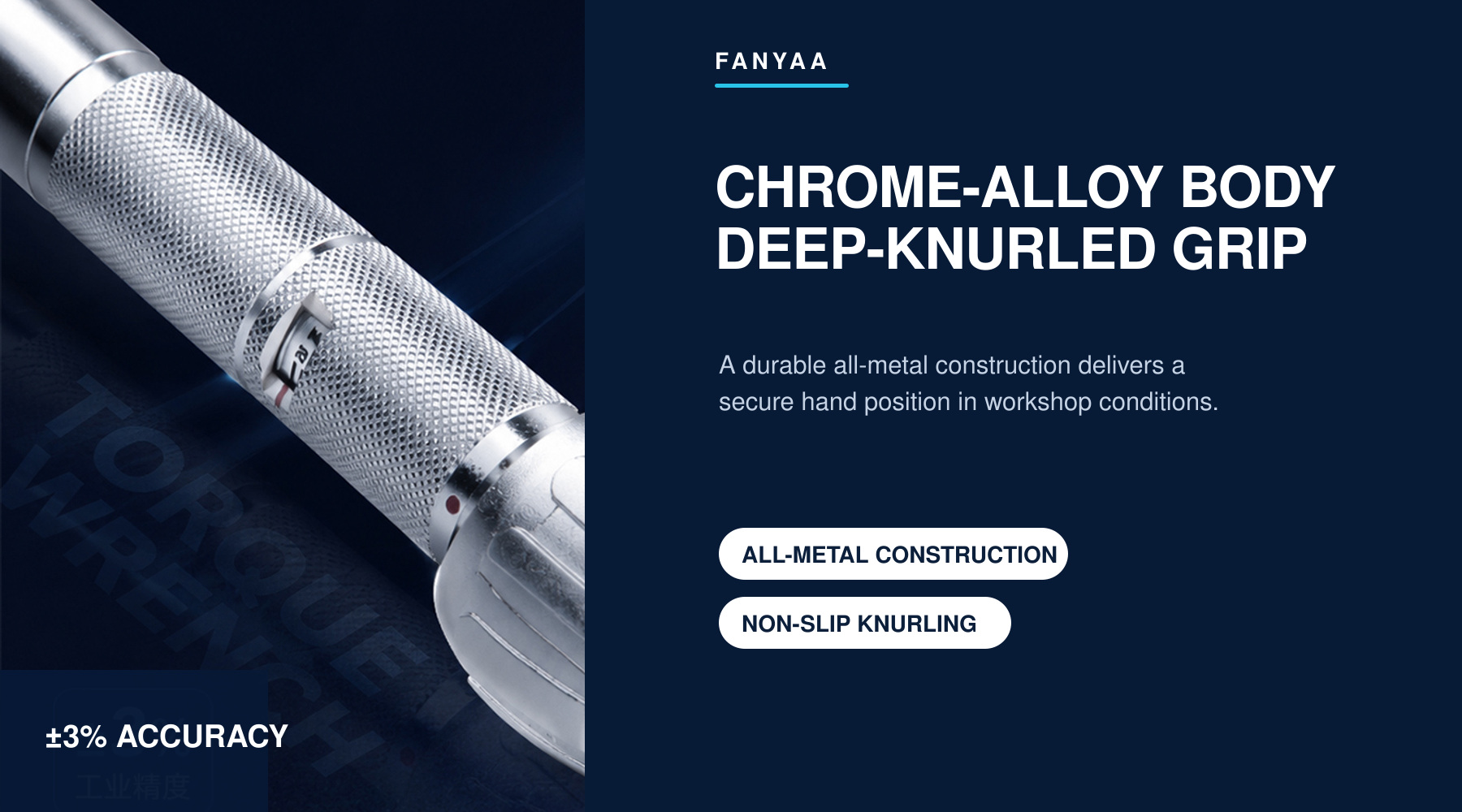
Torque tools used in professional environments must withstand regular handling, adjustment and fastening cycles. The QL Series combines an all-metal body with a textured grip surface to provide a solid, workshop-oriented construction.
The knurled handle improves hand contact during torque application and adjustment, while the mechanical design avoids dependence on batteries or electronic controls. It is a practical choice for maintenance teams looking for a durable professional torque wrench for routine use.
Multiple Torque Ranges for Different Fastening Requirements
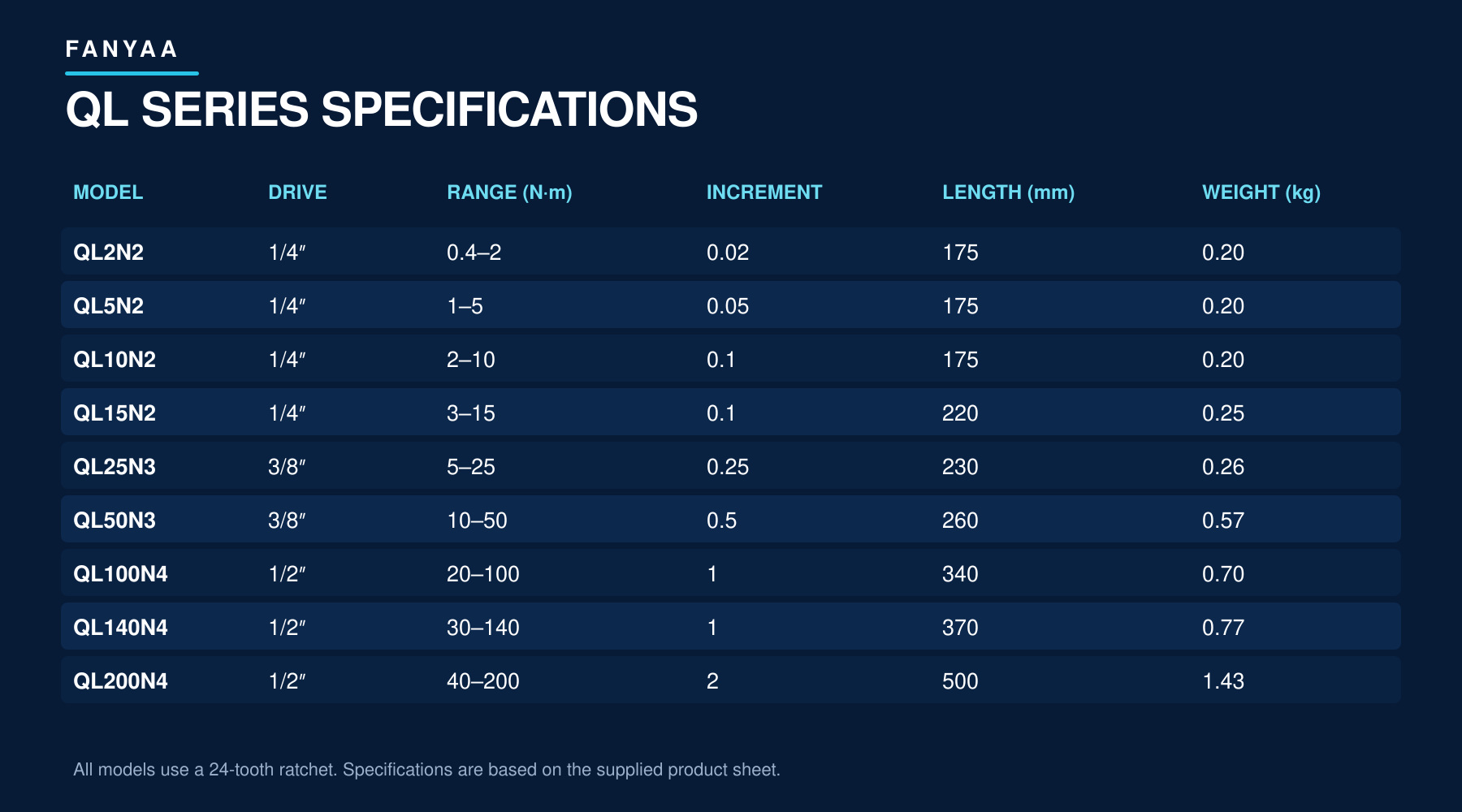
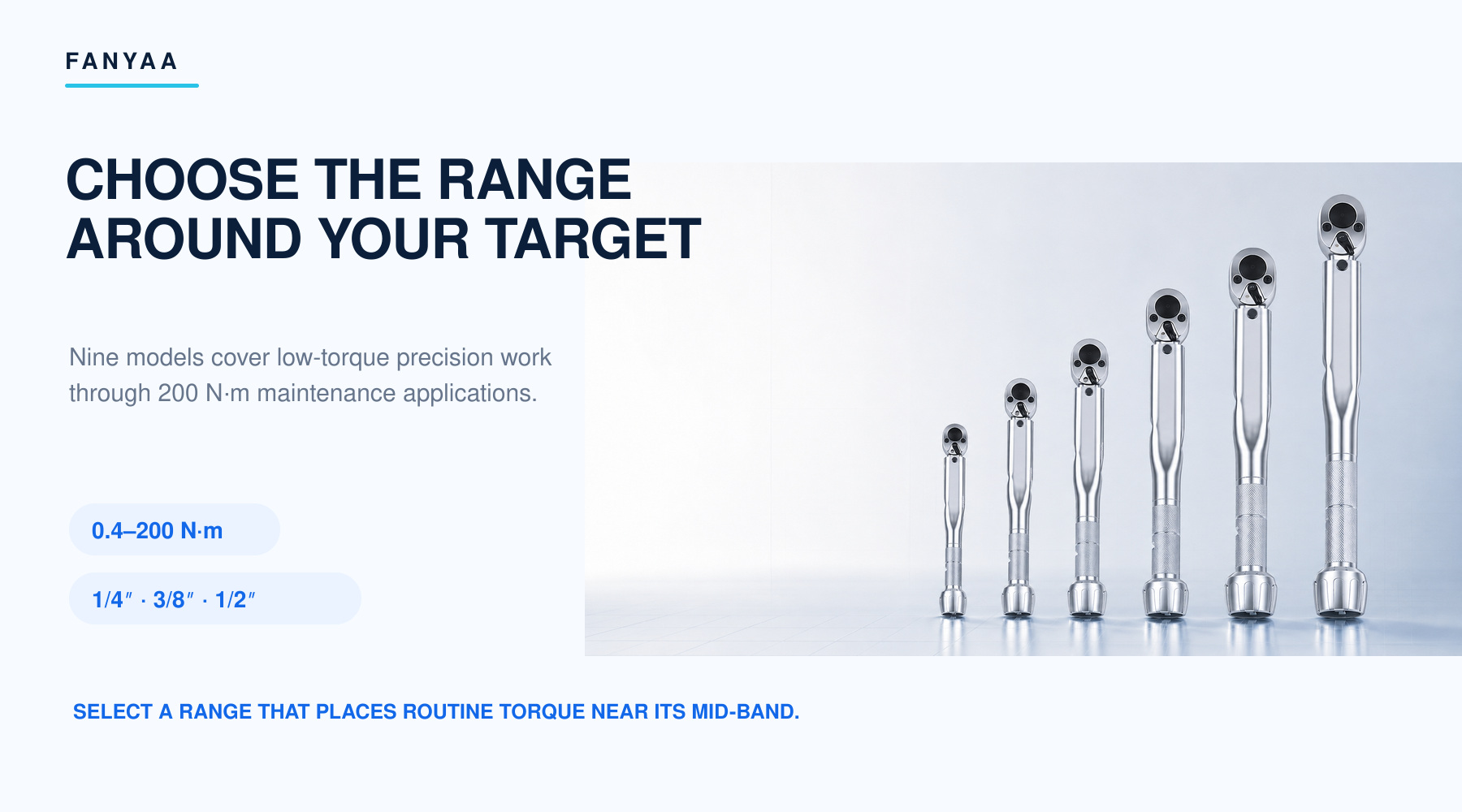
Choosing the correct torque wrench range is important for both usability and fastening control. The QL Series covers torque requirements from 0.4 to 200 N·m, with 1/4", 3/8" and 1/2" square-drive configurations available across the product family.
This range allows buyers to select a suitable model for light precision fastening, general mechanical maintenance or higher-torque service work instead of relying on one wrench for every application.
For frequently repeated torque values, selecting a wrench that places the working torque comfortably within its operating range is recommended.
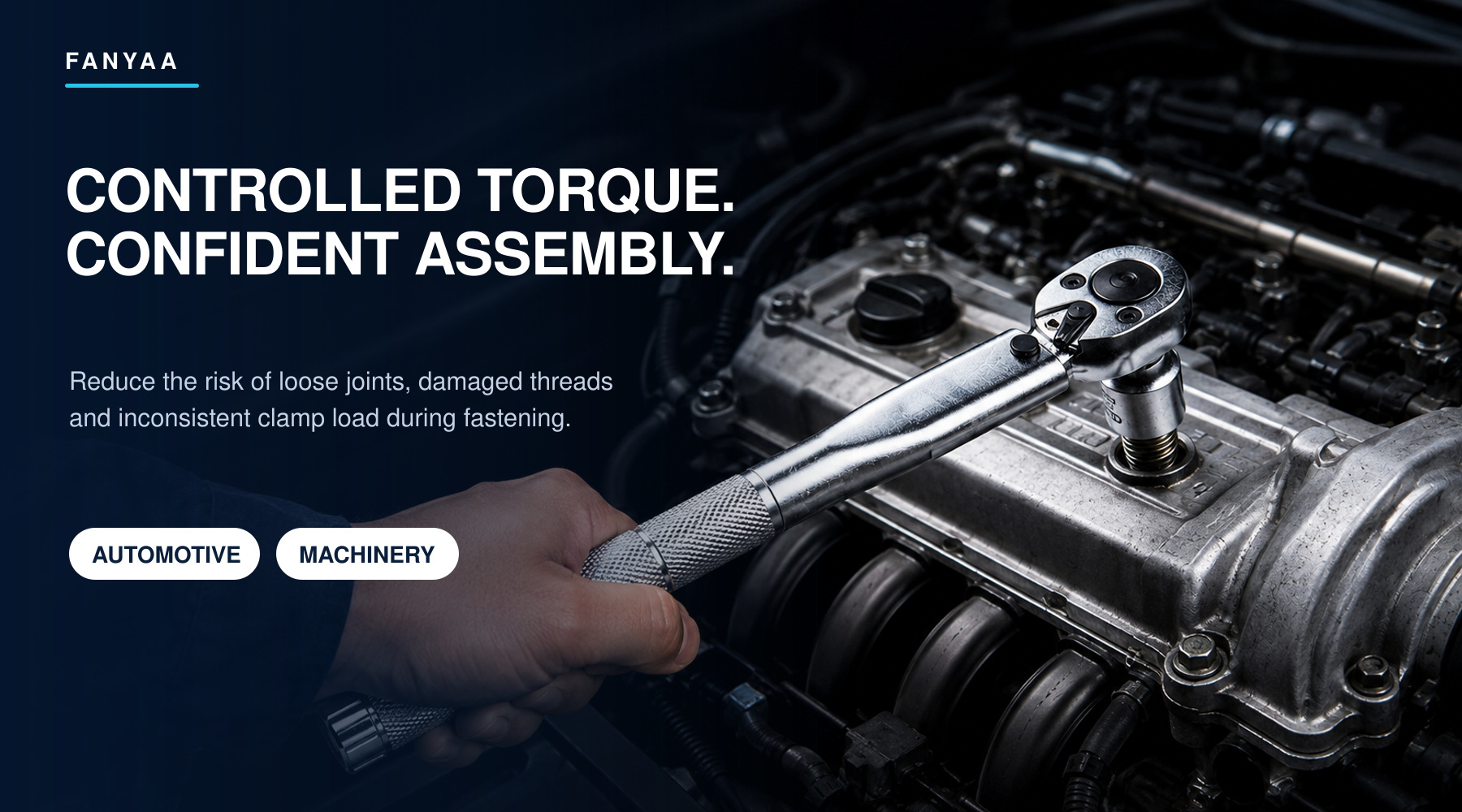
Mechanical Torque Wrench for Automotive and Industrial Applications
The QL Series can support a wide range of controlled fastening tasks, from automotive maintenance to industrial equipment servicing.
In automotive applications, preset torque control can be used for engine components, mechanical assemblies and other bolted connections requiring specified tightening values. In industrial environments, the wrench is suitable for machinery maintenance, equipment installation and routine production assembly.
Its purely mechanical operation also makes it convenient for technicians who need a portable torque solution without charging, pairing or electronic setup.
Find the Right QL Torque Wrench for Your Application
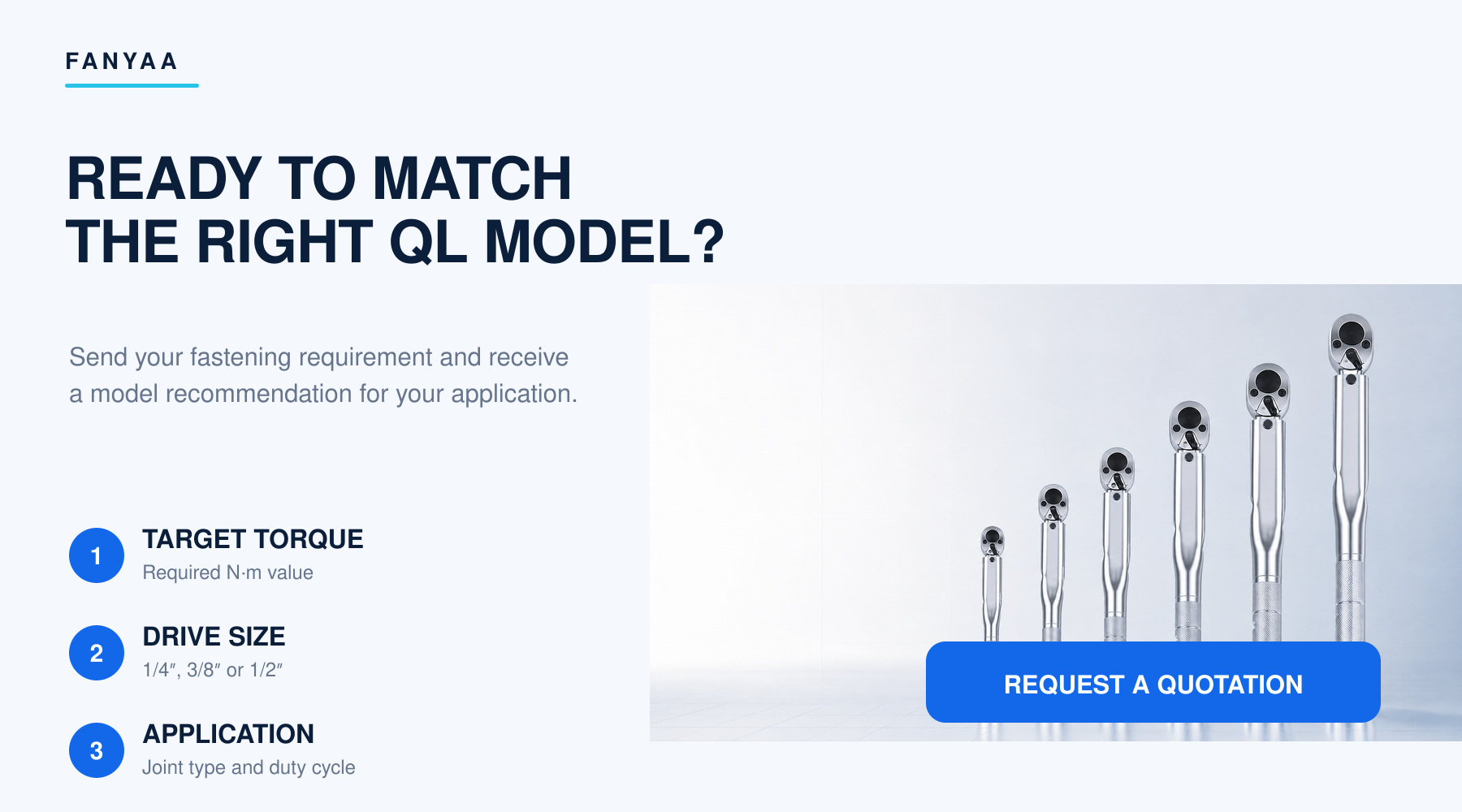
Not sure which preset torque wrench matches your fastening requirement?
Send us your target torque, square-drive size and application information, and the FANYAA team can recommend a suitable QL model based on your operating range and fastening conditions.
For distributors, tool suppliers and industrial buyers, model selection, product specifications, bulk purchasing and OEM/ODM requirements can also be discussed according to your market needs.
QL Preset Torque Wrench FAQ
1. How do I choose the right torque wrench range?
Choose a torque wrench that comfortably covers your target torque rather than working continuously near the minimum or maximum of its range. The FANYAA QL Series offers multiple models from 0.4 to 200 N·m, with 1/4", 3/8" and 1/2" drive options for different fastening requirements.
2. How does a click-type torque wrench work?
Set the required torque value before tightening. When the preset torque is reached, the internal mechanical mechanism produces a noticeable click, indicating that the operator should stop applying additional force. This helps achieve more consistent tightening than relying on hand feel alone.
3. How often should a preset torque wrench be calibrated?
Calibration frequency depends on usage, working conditions and quality-control requirements. For regularly used professional torque tools, periodic calibration or verification is recommended. The wrench should also be checked after heavy impact, overload or whenever torque performance appears inconsistent.
4. Can the QL torque wrench be used to loosen bolts?
The reversible ratchet allows the working direction to be changed, but a precision torque wrench is primarily designed for controlled tightening. For seized or heavily tightened fasteners, we recommend using a standard ratchet or breaker bar first to avoid unnecessary stress on the torque mechanism.
5. Which drive size should I choose: 1/4", 3/8" or 1/2"?
The correct drive size depends on your required torque, fastener size and socket system. 1/4" drive models are suitable for lower-torque precision work, 3/8" drive models cover general maintenance, while 1/2" drive models are better suited to higher-torque automotive and industrial fastening.